Sceye and Softbank In The Haps Alliance For Japan
1. This Partnership is More than just Connectivity
When two businesses with different backgrounds — a New Mexico-based stratospheric aerospace company and one of Japan's largest telecoms conglomerates in building a national network of high-altitude platform stations, there is more to it than broadband. The Sceye SoftBank partnership represents a legitimate bet on the stratospheric system to be a continuous, profitable network of national telecoms- not a pilot project or proof of principle, rather rather the beginning of a real-time commercial rollout with a clearly defined timeframe and a nation-wide ambition.
2. SoftBank is a strategic investor to Support Non-Terrestrial Networks
It's true that SoftBank's desire to invest in HAPS hasn't come out of the blue. Japan's geography — with thousands of islands, mountainous terrain and coastal areas frequently affected by earthquakes, typhoons, and typhoons — creates persistent coverage gaps which ground infrastructure alone won't be able to fill. Satellite connectivity can help, however costs and latency are still limiting elements for mass-market apps. A stratospheric layered at 20 kms, that is held over certain regions and offering high-speed broadband with low latency to ordinary devices, resolves many problems at the same time. For SoftBank investing in stratospheric platforms is the logical expansion of the existing strategy for diversification beyond terrestrial network dependence.
3. Pre-Commercial & Commercial Services to be Designed for Japan in 2026, which will signal a real Momentum
The main feature that separates the partnership from prior HAPS announcements is the aim of commercial services that are pre-commercial in Japan in 2026. This isn't just a vague agreement, it's an specific operational milestone with infrastructure, regulatory and commercial implications to it. Reaching pre-commercial status means the platforms have to perform station keeping consistently, delivering high-quality signals, and connecting to SoftBank's current network structure. The fact that this date has been publicly stated indicates both parties have done enough necessary regulatory and technical hurdles in order so that it is a real-world goal instead of aspirational marketing.
4. Sceye offers endurance and payload Capacity that Other Platforms Struggle to Match
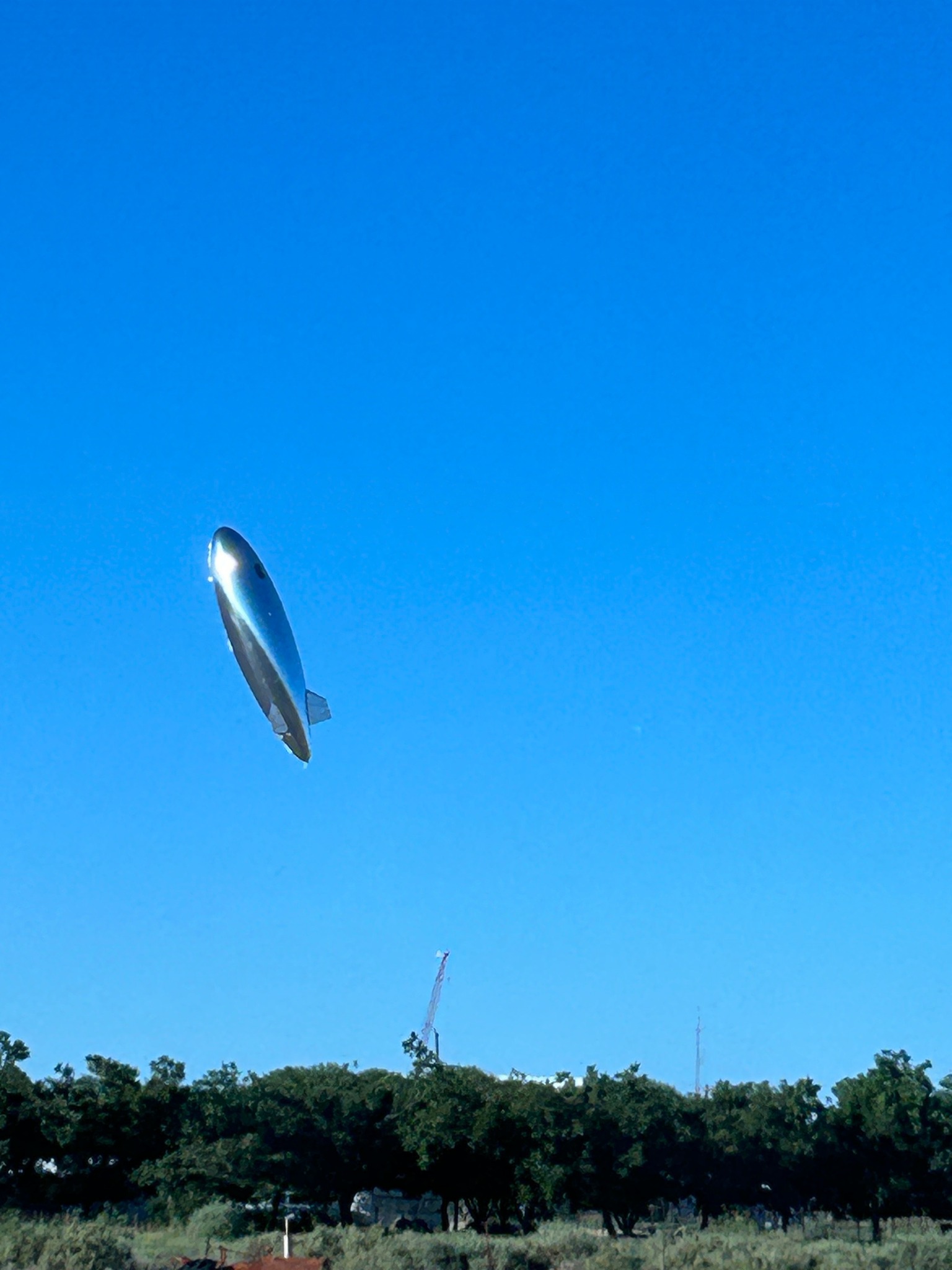
Not every HAPS vehicle is designed to be part of a large-scale commercial network. Fixed-wing solar aircraft usually sacrifice payload capacity for efficiency at altitude, which limits the amount of observation or telecommunications equipment they can carry. Sceye's airship that is lighter than air takes a different approach — buoyancy is the primary way to carry the weight of the vehicle, which means available solar energy goes toward propulsion, station keeping, and the powering of onboard systems instead of just a blip. This architectural choice provides substantial benefits in payload capacity and mission endurance as well as mission endurance. Both of these factors matter greatly when trying to remain in continuous coverage over heavily populated regions.
5. The Platform's Multimission Capability Does the Economics Work
One of the underappreciated aspects of the Sceye method is that an individual platform doesn't need to justify its operation cost through telecoms revenue alone. This same vehicle that provides stratospheric internet can also house sensors for greenhouse gas monitoring, disaster detection, and earth observation. For a country like Japan, which faces significant natural catastrophe risk and has national obligations around monitoring emissions, this multi-payload system makes it much simpler to justify at a federal as well as a commercial level. The telecoms antenna and climate sensor aren't in competition — they're sharing a platform that's already available.
6. Beamforming in conjunction with HIBS Technology create a signal that is commercially usable
Broadband transmission from 20 km can't be as simple as moving an antenna downwards. The signal must be planned, shaped and manipulated in a way that serves users efficiently over a huge expanse. Beamforming technology permits the stratospheric telecom antenna to direct the signal's energy those areas that are most in demand, instead of broadcasting continuously and using up capacity in empty land or uninhabited areas. In conjunction with the HIBS (High-Altitude IMT Base Station) standards, which enable the platform to work with existing 4G as well as 5G device ecosystems, this means ordinary smartphones can be connected with no specialist equipment — a critical prerequisite for any mass-market deployment.
7. Japan's Island Geography Is an Ideal Test Case for the rest of the world
If stratospheric connectivity operates at a large scale in Japan the design becomes accessible to all other countries which has similar challenges in coveragewhich is the majority countries around the globe. Indonesia, the Philippines, Canada, Brazil and many Pacific island nations all face similar issues that is a result of populations scattered across terrain that are incompatible with conventional infrastructure. Japan's combination and the capacity to regulate an actual need for geography makes it a top place to test the feasibility of the nation-wide network that is built on stratospheric platforms. How SoftBank and Sceye can demonstrate will help future deployments around the world for years.
8. It is clear that the New Mexico Connection Matters More Than It Seems
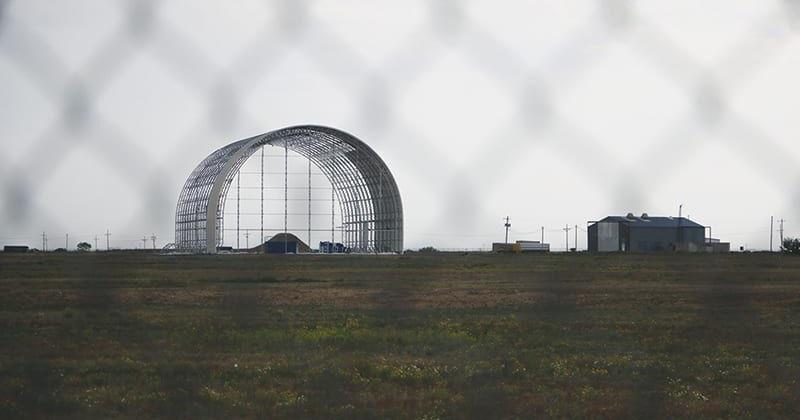
Sceye operating out of New Mexico isn't incidental. The state offers high altitude testing conditions, a well-established aerospace infrastructure, and airspace designed to accommodate the kind of long-term flight testing that stratospheric vehicle development demands. As one of the more serious aerospace firms within New Mexico, Sceye has created its development plan in an environment that supports genuine engineering iteration rather than press release cycles. The gap between announcing the HAPS platform and actually sustaining one for weeks at times is huge, however, and Sceye's New Mexico base reflects a company that has been working on the unglamorous work required to close that gap.
9. Founder Vision has shaped the Partnership's Long-Term Goals
Mikkel Vestergaard's past — rooted in applying technology to human and environmental challenges has determined what Sceye wants to build and the reason. The alliance with SoftBank does not solely represent a commercial telecoms company. The platform's emphasis for disaster protection, monitoring in real-time, as well as connectivity for the regions that aren't being served is a reflection of a guiding principle that the stratospheric internet should serve large-scale social and economic needs in addition to commercial ones. That framing has likely contributed to making Sceye a more compelling partner to a company like SoftBank that operates in a regulatory as well as public atmosphere where corporate purpose carries real weight.
10. 2026 Will be the Year in which in which the Stratospheric Tier either Proves Itself or Resets Expectations
The HAPS sector has been promoting commercial deployment for longer than most observers can remember. What is unique about this Sceye and SoftBank timetable truly important is the fact that it links an individual country, a specific operator, and even a milestone in service to a particular year. If the commercial services that are being offered in Japan launch on schedule and run as expected, 2026 will mark how the world's connectivity changed from promising technology and into functioning infrastructure. If they fail, the industry will face more serious questions as to whether the engineering problems are as easy to solve such as the recent developments suggest. Or not, the consortium has established a line in sky that is worth keeping an eye on. Have a look at the top Sceye endurance for blog tips including Sceye Softbank, sceye haps softbank, whats the haps, Stratospheric missions, sceye haps status 2025 2026, japan nation-wide network of softbank corp, Sceye endurance, Stratospheric missions, investment in future tecnologies, sceye haps project and more.
Mikkel Vestergaard's Vision Behind Sceye's Aerospace Mission
1. It's a largely under-rated Aspect on Aerospace Company Outcomes
The aerospace sector has two broad categories for companies. The first is built around a technology looking for applications — a technical capability in search of a market. This second approach starts with an matter of concern and proceeds backwards from the technology needed for addressing it. The distinction might seem abstract until you consider what each kind of company is actually building with its partners, the kinds of partnerships they pursue and how it trade-offs when resources become scarce. Sceye is clearly in the second category, and knowing the importance of orientation is crucial in understanding why the business chooses the particular engineering choices it has -lightweight design, multi-mission payloads that emphasize endurance and a founding company base located situated in New Mexico rather than the coastal aerospace clusters that attracted most venture-backed space companies.
2. The issue Vestergaard had to face was more Than Connectivity
The majority of HAPS companies anchor their founding storyline in telecommunications. to bridge the gap in connectivity empty billions, and the cost of reaching distant populations with no physical infrastructure. They are real problems, but they are commercial problems that require solutions. Mikkel Vestergaard's starting point was different. His background in applying the latest technology to humanitarian and environmental issues resulted in a guiding principle at Sceye that considers connectivity to be one of the outputs of stratospheric infrastructure rather than as its primary function. Monitoring greenhouse gas levels and detection of disasters, earth observation and monitoring of oil pollution and management of natural resources were all part of the mission's framework from the beginning — not things added later to give a telecoms platform a look more socially aware.
3. The Multi-Mission System is an eloquent expression of that Vision
When you realize that primary concern was how a stratospheric technology could tackle the world's most consequential monitoring and connectivity issues simultaneously and simultaneously, the multi-payload design looks less like a clever commercial strategy and becomes as the natural answer to the question. A platform that is equipped with technology for telecommunications, along with real-time methane monitoring sensors and wildfire detection technology isn't attempting for a solution that can be all things to all people but rather reflects an understanding that challenges that warrant solving from the stratosphere are interconnected and that a system capable of tackling multiple of them simultaneously is more compatible with the objective than one specifically designed for a single revenue stream.
4. New Mexico Was a Deliberate Decision, not an impulsive One
Sceye's location on the border of New Mexico reflects practical engineering demands- airspace access, atmospheric testing conditions, altitude capabilities — but also reveals something about the company's image. The established aviation clusters that are located in California and Texas have attracted companies whose principal target audience are investors, defence contractors, and the media industry that surrounds the area. New Mexico offers something different: the physical environment needed to carry out the work of creating and testing stratospheric lighter than air technology without the stress of being close to the people who finance and write about aerospace. Among aerospace companies within New Mexico, Sceye has constructed a program for development centered around validation of engineering rather than public narrative. A option that reflects a Founder who is who is more concerned about how well the platform performs instead of if it can generate impressive announcement cycles.
5. A design focus on endurance Is an indication of a longer-term mission focus
Short-endurance HAPS platforms provide interesting examples. Long-endurance platforms are infrastructure. The focus to Sceye duration — building machines that hold station for a period of months or weeks rather than days — indicates a belief in the founder's view that the most important issues to resolve in the stratosphere do not resolve their own issues between flight campaigns. Greenhouse gas monitoring that runs over a time period of one week and then goes into darkness, generating a record that has no scientific or regulatory significance. It is a requirement for an instrument that is moved and restarted each time a deployment occurs will not be able to provide the constant early warning layer that emergency managers require. The endurance specifications are a declaration of what the job actually demands and not a performance measurement which is used solely for its own benefit.
6. The Humanitarian Lens Shapes Which Partnerships Are Prioritised
The majority of partnerships are not worth exploring considering the criteria an organization uses to assess potential collaborators reveals something fundamental regarding its interests. Sceye's partnership with SoftBank on Japan's HAPS network — which targets pre-commercial services starting in 2026that is notable not only in terms of commercial scale, but because of its connection to a country that genuinely needs the infrastructure of the stratospheric region. Japan's seismic exposure, complicated geography, and dedication to monitoring environmental conditions makes it an ideal location for deployment in which the platform's multi-mission capabilities serve more than producing revenue in a market that already has sufficient alternatives. This alignment between commercial partnerships and mission purpose is not accidental.
7. Making investments in Future Technologies Requires Conviction About the Challenge
Sceye operates in an evolving environment in which the technologies it relies on lithium-sulfur batteries that have 425 Wh/kg of energy density, high-efficiency solar cells for stratospheric aircraft, advanced beamforming for stratospheric telecom antennas — are at the frontier of what's possible today. A business plan built around technologies that are constantly improving but aren't yet mature requires a founder who has an understanding of the importance of the issue to justify the risk to the timeline. Vestergaard's belief, that stratospheric connectivity will be a permanent part of global connectivity and monitoring will be the foundation for investing into future technologies that will not attain their full potential until the platform they create is already operating commercially.
8. Its Environmental Monitoring Mission Has Become more urgent since it was established
One of the benefits of founding a company around something that is real rather than a technology trend that is currently in use is that the problem gets more rather than less crucial over time. When Sceye was created, the argument for ongoing atmospheric greenhouse gas monitoring for wildfire detection as well as environmental disaster monitoring was compelling in principle. In the intervening years an increase in wildfire season, greater scrutiny of methane emissions through international climate frameworks and an insufficient monitoring infrastructure have all bolstered that argument to a large extent. The founding vision hasn't needed to be updated to remain applicable ? the world has moved towards it.
9. The Careers at Sceye Reflect an understanding of the Breadth of the Mission
The variety of disciplines required to construct and operate stratospheric networks for multi-mission needs exceeds what the majority of aerospace applications require. Sceye careers cover atmospheric science, materials engineering, power systems, telecommunications, Remote sensing and software creation and regulatory affairs — which is a multidisciplinary approach that highlights its broadness in what the platform is built to do. Companies based on a single-use technology tend to employ only in the field that this technology's technology is. Companies that are founded around a specific issue that requires multiple converging technologies for solving hiring issues across the boundaries of these disciplines. The talent profile Sceye attracts and develops is a reflection on the vision of its founders.
10. The Vision Work Because It's Specific About the Issue but not the solution
The most reliable founding concepts in technology companies are specific in the challenge they're solving and adaptable about the means. The frame of reference — the persistent stratospheric infrastructure to monitor, connection, and monitoring of environmental conditions is a precise enough concept to generate clear engineering requirements and clear partnership criteria, however, it's flexible enough be able to adapt to changes in technological advancements that enable. As the battery's chemistry improves with the advancement of solar cell efficiency and as HIBS standards are refined, and as the regulatory environment for stratospheric operations evolves, Sceye's mission is not changing, but the means to accomplish it can take advantage of the most effective technology available at any stage. This kind of structure — fixed on the problem but flexible on the solution — is the reason why the aerospace mission has continuity across a development time line defined in years, rather than product cycles. Take a look at the best softbank sceye partnership for site advice including sceye haps payload capacity, telecom antena, sceye haps status 2025, sceye haps project, detecting climate disasters in real time, softbank haps pre-commercial services japan 2026, sceye haps project status, high-altitude platform stations definition and characteristics, whats the haps, SoftBank investments and more.